Best practices for capturing packets to use in Visual BACnet

How long should your captures be, and where do you need to capture from?
Tips and tricks for troubleshooting with Visual BACnet

We often have people ask us how to create a packet capture, or pcap file, to use in Visual BACnet. While any pcap should give you some insight into your network, there are some best practices that vary depending on what you are trying to discover.

Capture duration

The optimal duration depends on the intended use of the pcap file.

To get a general system health check, perhaps after commissioning or before starting a job or for regular audits, we recommend a minimum of a one-hour capture

Once a problem is identified, shorter captures can be used to troubleshoot. By initially looking at the longer pcap, you should be able to identify the cause or the frequency of the problem, or the time of day during which it occurs. Use this information to capture a pcap that is five to 20 minutes long, to see if your work fixed the problem and increased the network health. In some cases, it may be good to force a command/action during the capture period to ensure the fix is applied correctly (e.g. confirm reply on read-property is no longer an error).
 

Intended use of Visual BACnet Recommended capture length
General system health check 1 hour
Troubleshooting and validating fix 5-20 minutes


Capture location

Run Wireshark on the Building Management System, or BMS. This will ensure that you get a complete system-level view of the Building Automation System. All global broadcast messages, communication with the BMS and general network traffic will be captured.  

As a secondary step, you can also perform captures on each individual MS/TP network. This will capture all MSTP traffic between controllers and devices that may not be seen by the BMS and higher level network. Analyzing this capture in Visual BACnet  will expose any problems arising from token passing. Learn how to capture MS/TP traffic

Note that some BMS and controllers include a packet capture feature, which are much easier to use and require no additional software or hardware. Please ensure the capture file has an extension of .cap or .pcap or .pcapng. If it does not by default, append a .cap before uploading to Visual BACnet.

Capture Filters

In most cases, we suggest not using any capture filters. Visual BACnet also shows non-BACnet communications, so leaving it in the capture is helpful to get a comprehensive view of your network. When you upload your file to Visual BACnet, you will be able to see how many BACnet packets are in the file, and what percentage of the traffic is BACnet.

If large amounts of network traffic are bloating the file or there are privacy concerns, Wireshark can be configured to capture only BACnet traffic. This will slightly lower the quality of the overall analysis because it will not be possible to identify spikes in general network traffic that are affecting the BAS system. If you would like to do this, watch this video to find out how.

Capture Activities

A capture file will only contain packets from devices that communicate during the network capture window.  It is possible that some devices may exist but be dormant on the network. In order to generate a list of all devices and networks, a Global Who-Is can be triggered on the system.

If you would like to see all of your devices and networks, trigger a Global Who-Is from the BMS. Some BMS software can induce a Global Who-Is on the system. In other cases, a Global Who-Is can be triggered by resetting the BMS.

If you are using Visual BACnet for a particular problem, ensure that the action or commands triggering the problem occur during the capture period. If you know exactly what is the BACnet command that triggers the error/problem, use the detailed graphs (e.g. Traffic by Source Destination Type) to visualize the impact on the traffic. Now drag and drop your PCAP file into Visual BACnet and find out how your system is doing!

Recent Blog Posts

You’re in the design phase of a new building. Contractors and vendors are all coming at you with demands.

The consulting specifying engineer of today is venturing into totally new territory: Division 25.

If you’re tired of going on site to capture BACnet data, look no further than your JACE.

OT Networks Overview

The latest release from Visual BACnet brings huge convenience and time saving for users with JACE controllers.

Recent Projects

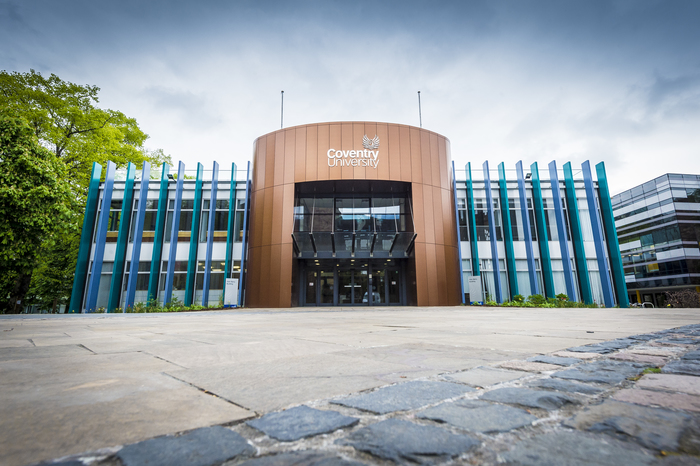
Coventry University

COVENTRY UNIVERSITY

Chris Goodman, the Senior BMS Technician at Coventry University, had broadcast storms that were happening more and more frequently. 

Ongoing construction due to Coventry’s campus expansion meant lots of new activity, with technicians installing new devices and making network changes. Already juggling these constant additions and alterations, Goodman and his small team then had to deal with the subsequent broadcast storms. As the broadcast storms became more frequent, Goodman and his team needed a solution.

Find out how Visual BACnet helped Chris solve the broadcast storms and improve Network Health in our free case study!

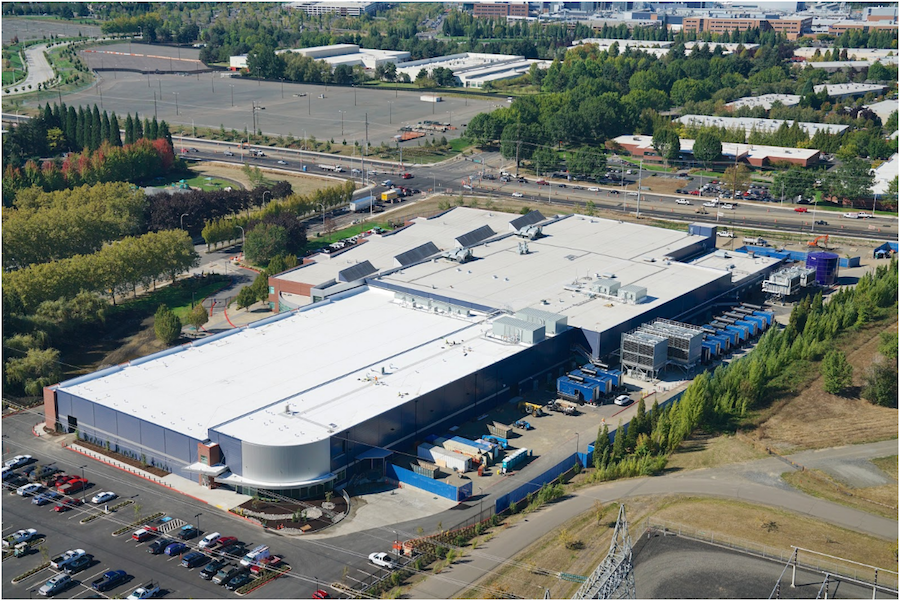
Data center expansion with OTI and Optigo Connect

DATA CENTER EXPANSION

Stack Infrastructure is a portfolio of hyperscale computing data centers. OTI completed work on Phases I and II, and returned for the Phase III build-out of a 4-megawatt data hall and brand new central plant. The Optigo Connect network put in place in Phases I and II was expanded on this project. The team achieved quick roll-out of a large, multi-service redundant network using the Optigo OneView management interface. Going forward, the facility management team can use OneView to remotely monitor equipment, manage power usage, and meet up-time goals.

Optigo Connect MR Soluciones The Landmark

THE LANDMARK

The Landmark is a sophisticated mixed-use high-rise in Mexico. The owners wanted to integrate all OT systems in the skyscraper, while maintaining separate networks for each application. The Landmark is the fourth joint project between Optigo Networks and MR Soluciones. Together, these companies provide robust services to meet any challenge.

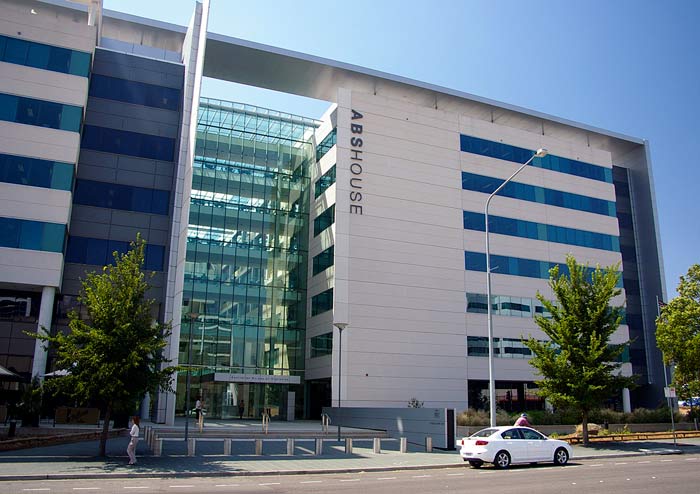
Australian Bureau of Statistics at 45 Benjamin Way with Delta Building Automation

45 BENJAMIN WAY

Delta Building Automation (Australia) had a big job renovating the Headquarters for the Australian Bureau of Statistics (ABS) at 45 Benjamin Way. The building owner wanted to improve the building’s energy use and increase their National Australian Built Environment Rating System (NABERS) score to more than 4.5 stars, out of a possible total of six. Securing the network both internally and externally was a big priority, as well.

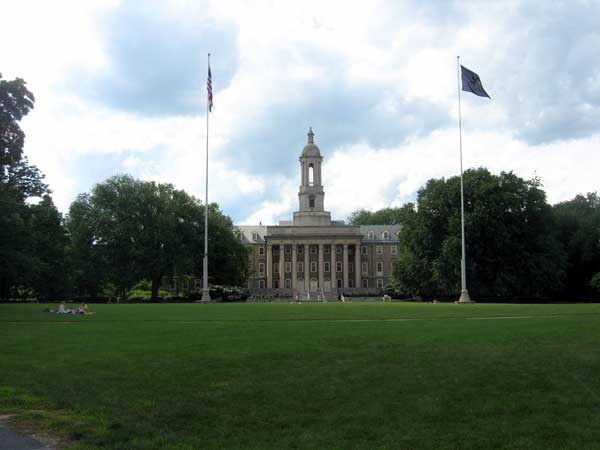
Penn State University Optigo Networks Visual BACnet

PENN STATE UNIVERSITY

When Tom Walker looked at Penn State University’s Navy Yard network, he saw huge issues. The system was busy and loud, to the point where the overrun network was bringing down the entire building. Because this was happening on the MS/TP network, pinpointing the problem would mean boots on the ground to segment and test the chain, piece by piece.

Penn State University Optigo Networks Visual BACnet

PENN STATE UNIVERSITY

When Tom Walker first started working at Penn State University four years ago, there were a lot of network issues. Buildings were dropping offline. Broadcast traffic was pushing 90,000 packets per hour. Walker was on the phone almost every single night because devices were down or had to be reset.


Torre Manacar Mexico City Optigo Connect

TORRE MANACAR

When MR Soluciones began work on Torre Manacar, they knew they needed a flexible and scalable network infrastructure to support a wide array of integrated systems. Optigo Networks was a natural fit for the massive project, designing a robust network at a competitive cost.

short

SHORT PUMP TOWN CENTER

Short Pump Town Center, an upscale retail center, underwent a complete renovation in 2014. The flexibility of Optigo Networks’ solution meant the retail center’s unknown final design was not a barrier to placing IP surveillance equipment in the field.

BOULEVARD MALL

BOULEVARD MALL

Optigo Networks connected New York-based Boulevard Mall’s security surveillance devices in December 2015, using a Passive Daisy Chain topology.

Visual BACnet tech support team

TECH SUPPORT TEAM

One tech support team at a manufacturer purchased an account with Visual BACnet in April 2017, for technical problems around the world.