
Resolve Problems Faster By Commissioning Your Network

Commissioning your network exposes issues you might not know about
Resolve Problems Faster By Commissioning Your OT Network

Very few people commission their networks, but doing so could save thousands of dollars when troubleshooting building problems. If you don’t commission your network, there could be issues festering below the surface that you are completely unaware of. It’s like biking down a dirt road full of potholes. At first, it seems fine, but start adding cars, trucks, and more traffic to it. Seemingly small issues like a chatty network and controllers randomly going offline will not only continue to happen; they will get worse as more traffic and controllers are added to the network. Pretty soon that road won’t support the traffic, and there will be more problems.

Knowing the state of the network gives a starting point to make an educated diagnosis. It helps you understand if your changes have good or bad effects. Is the network clean and trouble free? Is the traffic OK? Are there any traffic bursts? Is anything constantly asking for information? Is the data pipe overloaded? Is everything online? Are there any duplicate device addresses? Answering these questions could save you a lot of time and money.

Troubleshooting is normally focused on controllers, even when the controller isn’t the root of the problem. Techs and commissioning agents will look at the equipment, the control points, and the sequence. They might check the wiring if there are connectivity issues. If the network isn’t reliable, though, the rest of it doesn’t matter. Without looking at the network first, you might spend days or longer trying to troubleshoot something that isn’t wrong.

Typically commissioning happens the very first time you make a big update, such as adding a network or a controller, major sequence changes, or site reconfiguration. It’s just like when you’re buying a car: you take it for a test drive to make sure the car won’t break down as soon as you drive it off the lot.

Technically, every time you make a big change, you should commission your network before and after the change. That doesn’t always happen, and this is where problems begin. Typically, a tech will do their sequence checks and I/O checks, see that the product works, and sign off. If they didn’t check the network, they might have done damage that they didn’t even know about. The network starts having problems, and it affects other parts of the network that weren’t a problem before.

Now the customer running the control system realizes the network is acting strangely. Maybe the network is slow or unresponsive; controllers are randomly dropping offline; there are missing updates or control signals. The customer has no idea why. They don’t know where to go, and they don’t know what to check. They bring techs onto the site, spending a lot of money to get them there. The techs say their products are fine, and something else is causing the problem. Everyone points fingers and passes blame, and the customer can’t get the help they need.

Instead, the customer suffers with the problem and tries to get used to it. Eventually, they become frustrated. A few years later, they buy a brand new control system. This might fix the problems, or it might add to them. Either way, diagnosing and resolving issues is much faster and cheaper when you look at the network first.

Not commissioning the network before and after additions leads to a huge loss of money; you should know when there’s a problem and where it is. A diagnostics tool like Visual BACnet from Optigo Networks gives users a keen insight into their building network’s health. With the platform, it’s easy to assess your network’s health, visualize patterns, and diagnose. Simply upload a Wireshark file, and the user-friendly interface illustrates the state of the network. The platform’s graphs show exactly how devices are behaving, so users can track anomalies. A network health score gives a concrete idea of the network’s condition: a score of 80% is good, while a score 20% is bad. Users can even drill down to find which devices — from which manufacturers — are acting up.

Commissioning your network shows you issues you didn’t even know were there. This saves time and money and keeps your building operating the way it should. Get to the root of problems and solve them, faster.

This article was originally published on Automated Buildings

Recent Blog Posts

You’re in the design phase of a new building. Contractors and vendors are all coming at you with demands.

The consulting specifying engineer of today is venturing into totally new territory: Division 25.

If you’re tired of going on site to capture BACnet data, look no further than your JACE.

OT Networks Overview

The latest release from Visual BACnet brings huge convenience and time saving for users with JACE controllers.

Recent Projects

Coventry University

COVENTRY UNIVERSITY

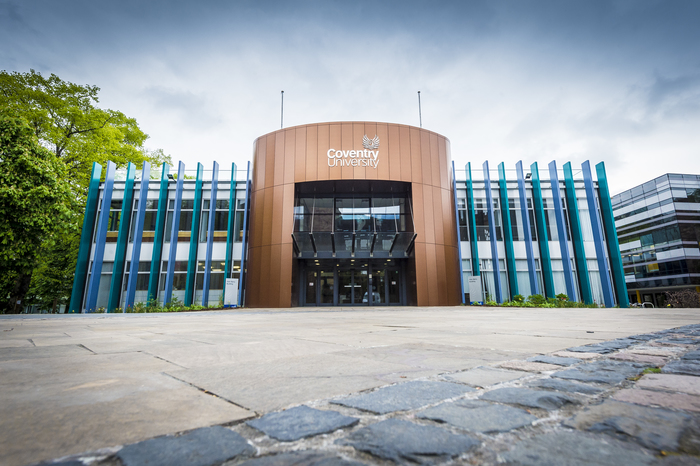
Chris Goodman, the Senior BMS Technician at Coventry University, had broadcast storms that were happening more and more frequently. 

Ongoing construction due to Coventry’s campus expansion meant lots of new activity, with technicians installing new devices and making network changes. Already juggling these constant additions and alterations, Goodman and his small team then had to deal with the subsequent broadcast storms. As the broadcast storms became more frequent, Goodman and his team needed a solution.

Find out how Visual BACnet helped Chris solve the broadcast storms and improve Network Health in our free case study!

Data center expansion with OTI and Optigo Connect

DATA CENTER EXPANSION

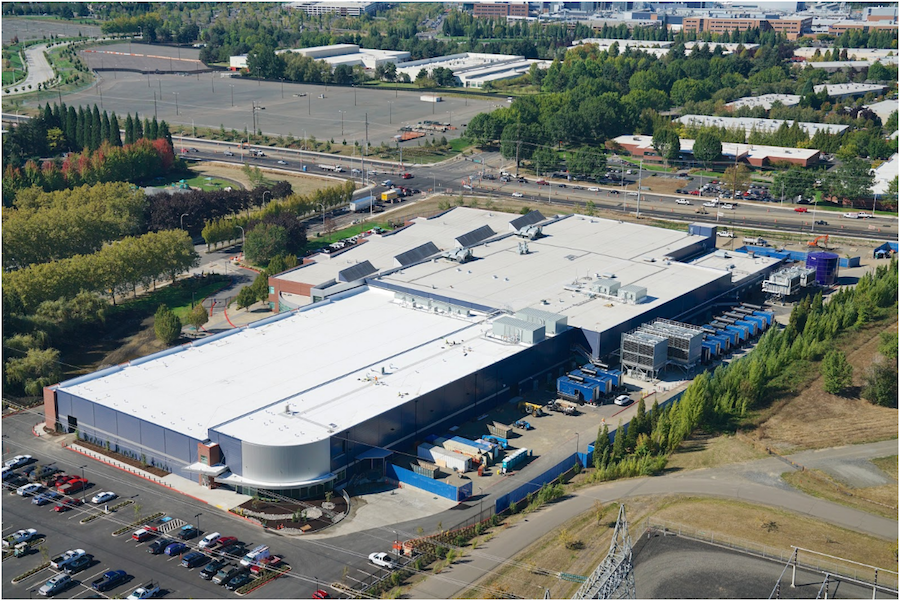
Stack Infrastructure is a portfolio of hyperscale computing data centers. OTI completed work on Phases I and II, and returned for the Phase III build-out of a 4-megawatt data hall and brand new central plant. The Optigo Connect network put in place in Phases I and II was expanded on this project. The team achieved quick roll-out of a large, multi-service redundant network using the Optigo OneView management interface. Going forward, the facility management team can use OneView to remotely monitor equipment, manage power usage, and meet up-time goals.

Optigo Connect MR Soluciones The Landmark

THE LANDMARK

The Landmark is a sophisticated mixed-use high-rise in Mexico. The owners wanted to integrate all OT systems in the skyscraper, while maintaining separate networks for each application. The Landmark is the fourth joint project between Optigo Networks and MR Soluciones. Together, these companies provide robust services to meet any challenge.

Australian Bureau of Statistics at 45 Benjamin Way with Delta Building Automation

45 BENJAMIN WAY

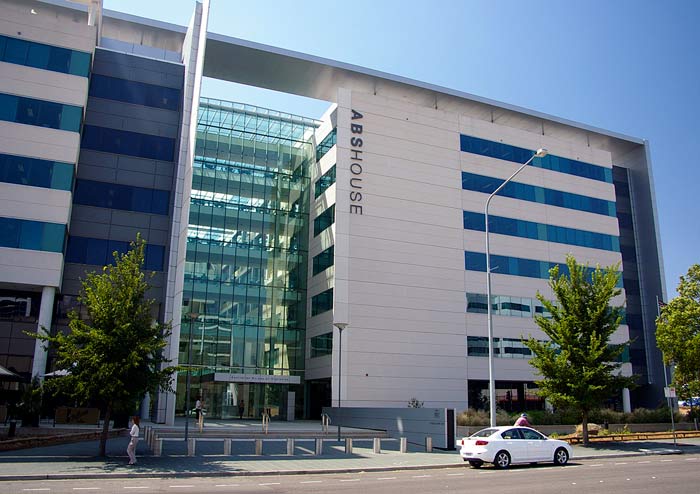
Delta Building Automation (Australia) had a big job renovating the Headquarters for the Australian Bureau of Statistics (ABS) at 45 Benjamin Way. The building owner wanted to improve the building’s energy use and increase their National Australian Built Environment Rating System (NABERS) score to more than 4.5 stars, out of a possible total of six. Securing the network both internally and externally was a big priority, as well.

Penn State University Optigo Networks Visual BACnet

PENN STATE UNIVERSITY

When Tom Walker looked at Penn State University’s Navy Yard network, he saw huge issues. The system was busy and loud, to the point where the overrun network was bringing down the entire building. Because this was happening on the MS/TP network, pinpointing the problem would mean boots on the ground to segment and test the chain, piece by piece.

Penn State University Optigo Networks Visual BACnet

PENN STATE UNIVERSITY

When Tom Walker first started working at Penn State University four years ago, there were a lot of network issues. Buildings were dropping offline. Broadcast traffic was pushing 90,000 packets per hour. Walker was on the phone almost every single night because devices were down or had to be reset.


Torre Manacar Mexico City Optigo Connect

TORRE MANACAR

When MR Soluciones began work on Torre Manacar, they knew they needed a flexible and scalable network infrastructure to support a wide array of integrated systems. Optigo Networks was a natural fit for the massive project, designing a robust network at a competitive cost.

short

SHORT PUMP TOWN CENTER

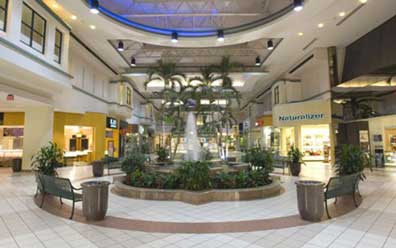
Short Pump Town Center, an upscale retail center, underwent a complete renovation in 2014. The flexibility of Optigo Networks’ solution meant the retail center’s unknown final design was not a barrier to placing IP surveillance equipment in the field.

BOULEVARD MALL

BOULEVARD MALL

Optigo Networks connected New York-based Boulevard Mall’s security surveillance devices in December 2015, using a Passive Daisy Chain topology.

Visual BACnet tech support team

TECH SUPPORT TEAM

One tech support team at a manufacturer purchased an account with Visual BACnet in April 2017, for technical problems around the world.