Take the pain away from IT

Quit juggling IT and OT devices
IT and OT in smart buildings

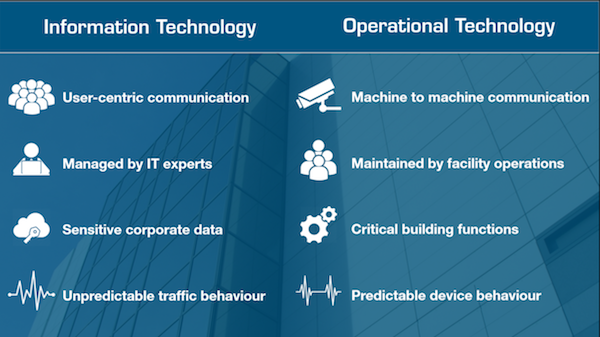
IT and Operational Technology (OT) departments have a lot in common: IT and smart OT devices are IP-enabled. They communicate on networks. They breathe life into cold, brick and mortar buildings.  

But when you look a little closer, IT and OT have very separate needs. The protocols, security standards, bandwidth, and required skills are entirely different. Yet, on converged networks, they’re managed as one — always by the IT department.

So, one department has control over the entire building, and the other has none. The problem is, computers are not the same as CCTV, HVAC, and other mechanical equipment. The devices don’t behave the same way, they aren’t managed the same way, and they aren’t secured in the same way. The IT devices require networking knowledge, while OT devices require mechanical equipment know-how and BMS management. These are different skills. Trying to shoehorn one expert into another’s role just doesn’t work. It’s like asking a psychologist to replace a brain surgeon. There might be similarities between the fields — in this case, both are doctors who deal with brains — but I know who I’d rather have hold the scalpel. 

When the IT and OT networks are separated, OT can truly take the pain away from IT. After all, IT isn’t trained to understand OT equipment, so how can it fully support OT systems? If the networks are separated, two departments are responsible for their own network and their own success. This is one reason we at Optigo recommend separate IT and OT networks.

Separation also makes for more secure networks. Typically, OT devices are not secured properly, if at all, because doing so is painful, and requires many lines of CLI. If an edge device isn’t properly secured, though, there might be vulnerabilities that a hacker can capitalize on. With an Optigo ConnectTM  OT network, OT network managers can easily secure their network with one click. Then if they need to reopen a closed port, or lock a port to a different MAC address, they can individually make the changes, rather than relying on IT.

Converged networks can also cause a lot of quality problems. In the case of Seattle’s premier sports venue, it led to major bandwidth issues. The bandwidth was maxed out by the IT network. Because of this, their state-of-the-art surveillance system was glitching, and even dropping out. They weren’t getting the full value of the HD cameras they’d invested in. The only way to solve these bandwidth constraints was to completely separate the surveillance system from the IT network.

Learn more in our case study on the Seattle stadium’s bandwidth woes.

If you’re working on a converged network, maybe this all sounds familiar. Maybe you’ve been frustrated by a lack of control. Maybe you’ve seen slow networks. Maybe you’ve had security issues. If you have, I’d urge you to learn more about OT networks. Separation might seem drastic, but it’s the logical way to manage a building full of smart devices with diverse needs.

Read the Basics of OT Networks

Recent Blog Posts

You’re in the design phase of a new building. Contractors and vendors are all coming at you with demands.

The consulting specifying engineer of today is venturing into totally new territory: Division 25.

If you’re tired of going on site to capture BACnet data, look no further than your JACE.

OT Networks Overview

The latest release from Visual BACnet brings huge convenience and time saving for users with JACE controllers.

Recent Projects

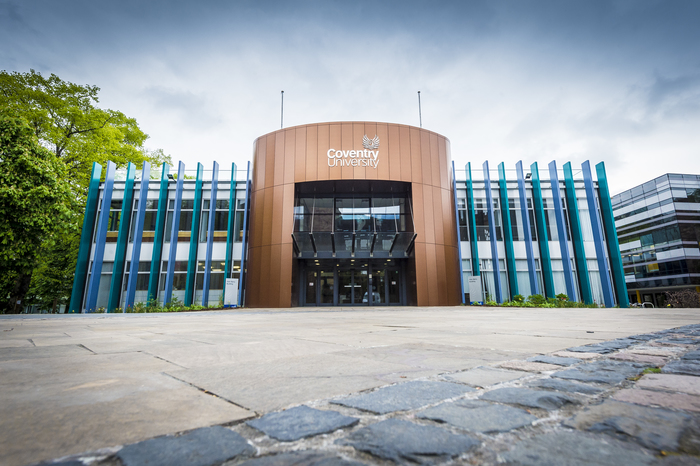
Coventry University

COVENTRY UNIVERSITY

Chris Goodman, the Senior BMS Technician at Coventry University, had broadcast storms that were happening more and more frequently. 

Ongoing construction due to Coventry’s campus expansion meant lots of new activity, with technicians installing new devices and making network changes. Already juggling these constant additions and alterations, Goodman and his small team then had to deal with the subsequent broadcast storms. As the broadcast storms became more frequent, Goodman and his team needed a solution.

Find out how Visual BACnet helped Chris solve the broadcast storms and improve Network Health in our free case study!

Data center expansion with OTI and Optigo Connect

DATA CENTER EXPANSION

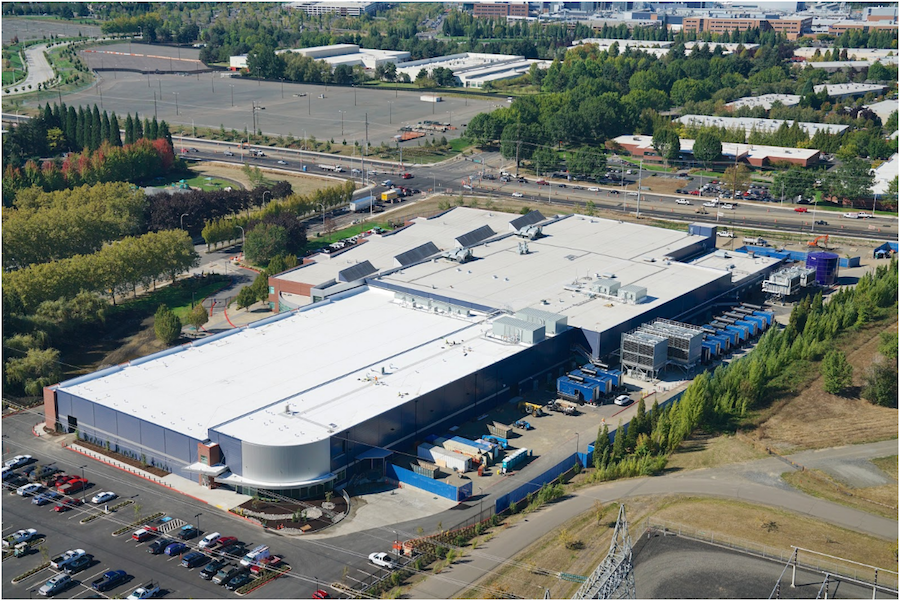
Stack Infrastructure is a portfolio of hyperscale computing data centers. OTI completed work on Phases I and II, and returned for the Phase III build-out of a 4-megawatt data hall and brand new central plant. The Optigo Connect network put in place in Phases I and II was expanded on this project. The team achieved quick roll-out of a large, multi-service redundant network using the Optigo OneView management interface. Going forward, the facility management team can use OneView to remotely monitor equipment, manage power usage, and meet up-time goals.

Optigo Connect MR Soluciones The Landmark

THE LANDMARK

The Landmark is a sophisticated mixed-use high-rise in Mexico. The owners wanted to integrate all OT systems in the skyscraper, while maintaining separate networks for each application. The Landmark is the fourth joint project between Optigo Networks and MR Soluciones. Together, these companies provide robust services to meet any challenge.

Australian Bureau of Statistics at 45 Benjamin Way with Delta Building Automation

45 BENJAMIN WAY

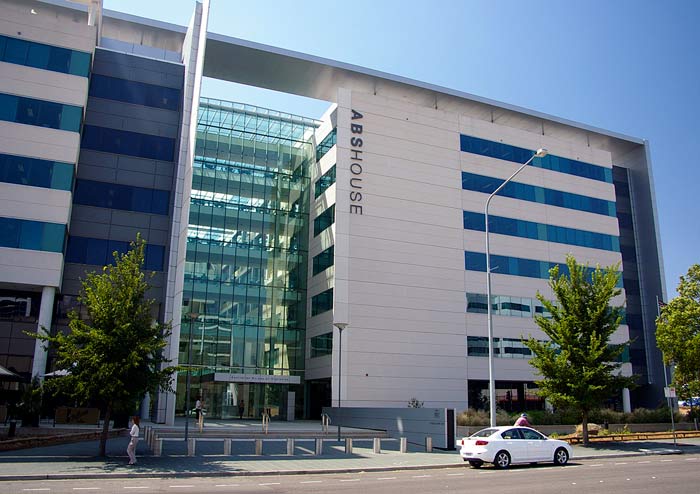
Delta Building Automation (Australia) had a big job renovating the Headquarters for the Australian Bureau of Statistics (ABS) at 45 Benjamin Way. The building owner wanted to improve the building’s energy use and increase their National Australian Built Environment Rating System (NABERS) score to more than 4.5 stars, out of a possible total of six. Securing the network both internally and externally was a big priority, as well.

Penn State University Optigo Networks Visual BACnet

PENN STATE UNIVERSITY

When Tom Walker looked at Penn State University’s Navy Yard network, he saw huge issues. The system was busy and loud, to the point where the overrun network was bringing down the entire building. Because this was happening on the MS/TP network, pinpointing the problem would mean boots on the ground to segment and test the chain, piece by piece.

Penn State University Optigo Networks Visual BACnet

PENN STATE UNIVERSITY

When Tom Walker first started working at Penn State University four years ago, there were a lot of network issues. Buildings were dropping offline. Broadcast traffic was pushing 90,000 packets per hour. Walker was on the phone almost every single night because devices were down or had to be reset.


Torre Manacar Mexico City Optigo Connect

TORRE MANACAR

When MR Soluciones began work on Torre Manacar, they knew they needed a flexible and scalable network infrastructure to support a wide array of integrated systems. Optigo Networks was a natural fit for the massive project, designing a robust network at a competitive cost.

short

SHORT PUMP TOWN CENTER

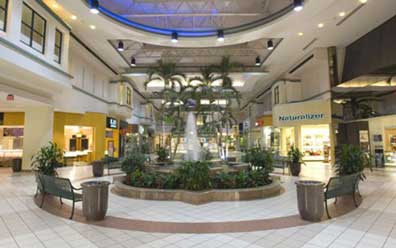
Short Pump Town Center, an upscale retail center, underwent a complete renovation in 2014. The flexibility of Optigo Networks’ solution meant the retail center’s unknown final design was not a barrier to placing IP surveillance equipment in the field.

BOULEVARD MALL

BOULEVARD MALL

Optigo Networks connected New York-based Boulevard Mall’s security surveillance devices in December 2015, using a Passive Daisy Chain topology.

Visual BACnet tech support team

TECH SUPPORT TEAM

One tech support team at a manufacturer purchased an account with Visual BACnet in April 2017, for technical problems around the world.