Key factors for cybersecurity and privacy in the Internet of Things

Understanding the NIST 8228 report

Information Technology (IT) and Operational Technology (OT) are different in a lot of ways, from their design to their maintenance workflows and more. When IT and OT merge, these differences create all new challenges for cybersecurity. 

IT has standards for protecting device security, data security, and people’s privacy, but these standards do not make sense for many connected OT devices. In IT, for example, cybersecurity vulnerabilities are the absolute top priority. In OT, operations are the top priority, while network security is a close second. Ensuring the building is still functioning as expected is critical to maintain physical safety and security, before addressing a network vulnerability. 

Last year, the National Institute of Standards and Technology (NIST) released the report “Considerations for Managing Internet of Things (IoT) Cybersecurity and Privacy Risks,” exploring these exact differences and cybersecurity threats. The report is an in-depth analysis of current threats and how IoT devices can or cannot meet those threats head-on. 

This is a huge opportunity to pull in your IT counterpart and collaborate on cybersecurity standards that make sense for your connected OT devices.

Join us for a one-hour webinar digging into the report, where we’ll summarize what IT and OT teams on the ground should know about their systems and security. We’ll dig into top risks identified in the report, challenges for securing the Internet of Things, and NIST’s recommendations.

Register now!

Date: February 25th, 2020
Time: 11:30 a.m. PDT / 2:30 p.m. EDT

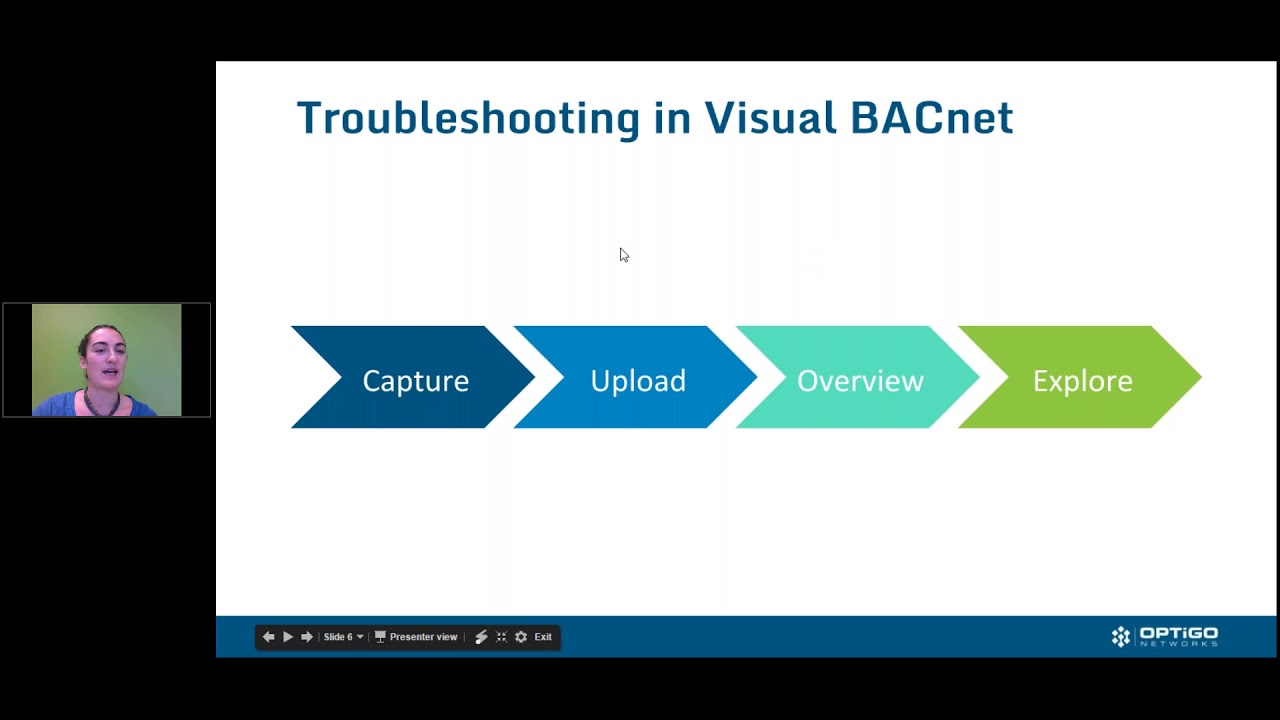
BACnet networks can be brought down by excessive traffic, devices sending errors, and hundreds of other variables. Luckily Wireshark can help identify the troublemaker devices and root causes of network problems.

Get ahead of the curve with data that enables your team to make the switch to proactive maintenance. Facility teams are busy — automating even a small part of your workload opens up opportunities to drive change in your building portfolio.

Following our last webinar, there is a huge demand for another webinar on how to use Visual BACnet. Therefore, we are bringing this webinar back and sneaking it in just before the holidays!

Diagnosing problems in your IP network is getting easier. But when your MS/TP network breaks down you have to put on your boots, drive to the site, set up a USB dongle and capture traffic right on site. This becomes a time consuming fix.

How do you know if something has been misconfigured? Do you spend days wondering who is responsible for the recent outage? Failures can go unnoticed for a long time and cause catastrophic problems at inconvenient times.

Determining the health of a building network is difficult, yet extremely valuable. In an age of convergence, building systems often have a number of contractors working on them, adding devices and continuously optimizing the system.

Join us as we take an in-depth exploration into Passive Optical Networking (PON).  We will look at what makes PON unique and discuss how it can create the perfect Converged Building Operations Network in single building or campus projects.

BACnet systems are shockingly vulnerable. Are your systems secure? Join us as we discuss the role of Cybersecurity in BACnet.

6 million commercial building in the US are believe to be secure. Every single one has exposed building controllers, security cameras and access control systems that an entry level hacker can hack into.